Miller Center for Healthcare Training
Healthcare career training at FCC has a new home. The newly opened Miller Center for Healthcare Training brings short-term, in-demand healthcare programs to our main campus with training facilities built to mirror real-world healthcare settings. From the main entrance to every lab and classroom, the Center is designed with one goal in mind: preparing students for a rewarding career with the skills, knowledge, and confidence to succeed from day one.
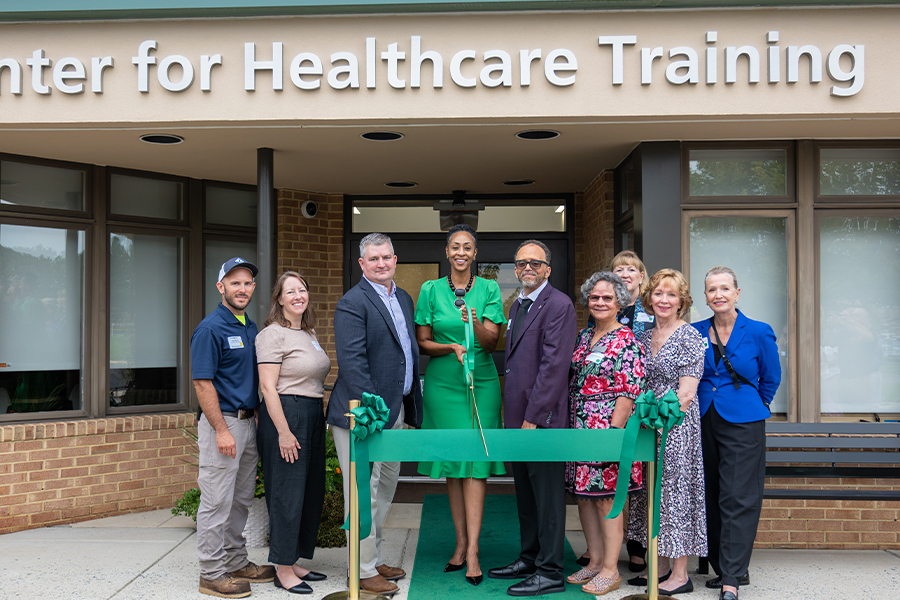
The Miller Center Opens Its Doors!
The Miller Center for Healthcare Training represents a significant investment in the future of healthcare in our region. As demand for skilled healthcare professionals continues to grow, the Center is designed to prepare students to enter the workforce with both confidence and competence.
By locating short-term healthcare training programs on the main campus where healthcare
degree pathways are also located, the Center strengthens connections between workforce
entry and long-term career advancement, making continued education and professional
growth more visible and attainable for students.
Students in this space will develop technical expertise and professional readiness,
transition more seamlessly from education into workforce settings, and benefit from
close interaction with faculty, mentors, and healthcare professionals.
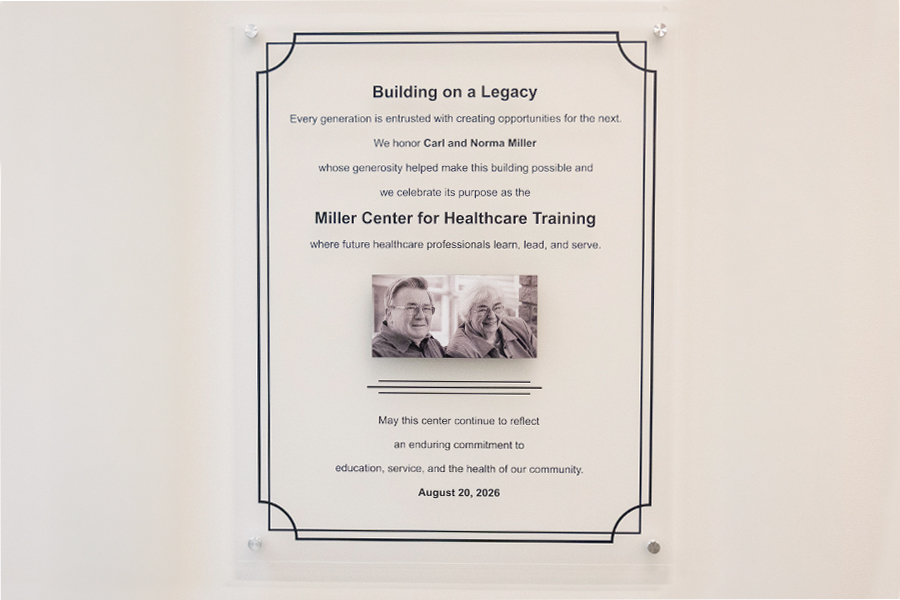
Honoring the Miller Legacy
The Miller Center for Healthcare Training reflects values closely associated with the Miller legacy, an investment in people, commitment to community, and belief in opportunity. Naming the Center in honor of the Miller family connects that legacy to generations of students who will learn, grow, and prepare for meaningful careers within these walls. Their future work caring for patients, supporting families, and strengthening the health of our region will carry that legacy forward for years to come.
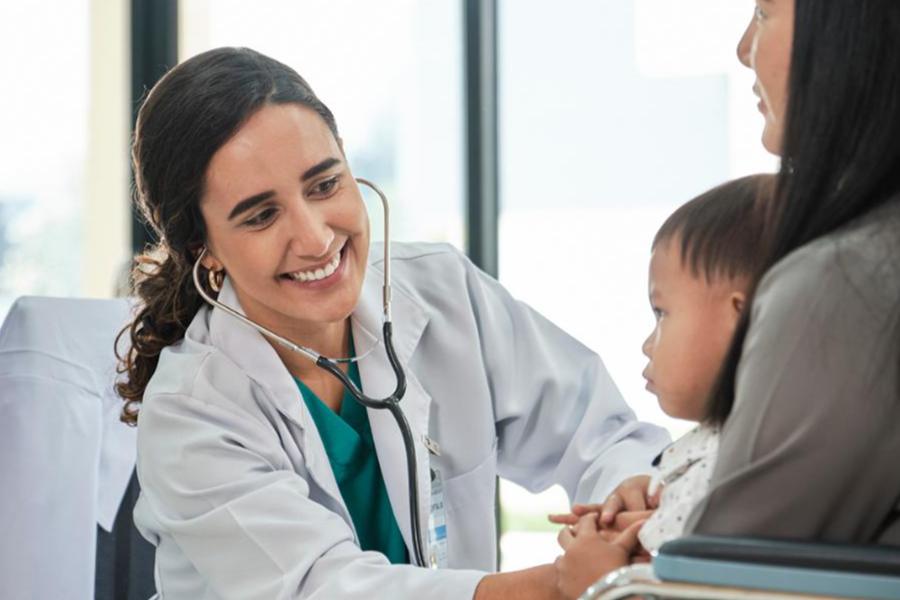
Training in Clinical Settings
From the moment students enter the Center, the environment is intentionally designed
to feel more like a modern healthcare facility than a college building. The space
itself becomes part of the learning experience, helping students build familiarity,
professionalism, confidence, and comfort within clinical environments before entering
the workforce.
Inside is a welcoming reception area, nursing skills classrooms inspired by long-term
care settings, and laboratories equipped with updated technology and furnishings commonly
found in today's healthcare environments. Together, these spaces are designed to create
immersive, hands-on learning experiences that align closely with workforce expectations
and the realities of modern healthcare practice.
Step Inside the Miller Center
Take a video tour of the Miller Center for Healthcare Training and see the labs, classrooms, and clinical spaces where your training happens. From the reception area to the equipment in each room, get a firsthand look at what your day-to-day training experience will feel like before you ever step through the door.
Healthcare Training Programs
Continuing Education & Workforce Development healthcare training programs at FCC prepare
students for industry-recognized certifications and direct entry into high-demand
healthcare careers. All short-term healthcare programs previously held at the Monroe
Center transitioned to the new Miller Center for Healthcare Training on the FCC main
campus. As a result of this move, the overall number of student cohorts in healthcare
training at FCC could increase from 16 to 25 per year. For fall 2026, FCC is able
to offer four additional cohorts, three of which are available in day and evening
classes for the first time. Depending on the program, a variety of flexible learning formats are available with in person, online, and hybrid options.
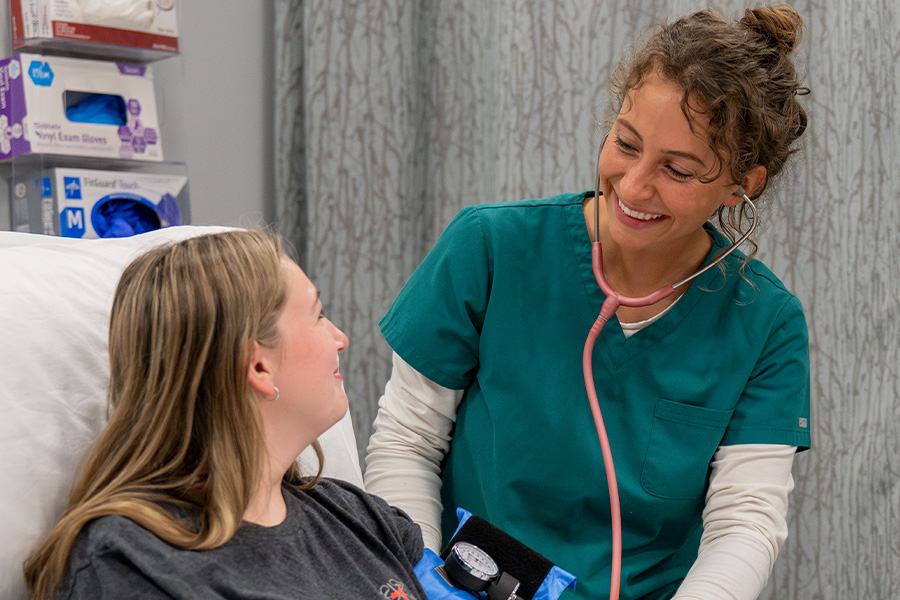
Certified Nursing Assistant (CNA)
Room M-102 and M-108 • Three to five months
Day or evening classes
Teaches basic patient care skills, the CNA's role on the healthcare team, disease processes, infection control, and safety. Students learn to measure vital signs and record medical information and complete a 45-hour clinical experience. Approved by the Maryland Board of Nursing and meets eligibility requirements for Maryland CNA certification and the Geriatric Nursing Assistant (GNA) exam.
Certified Nursing Assistant (CNA)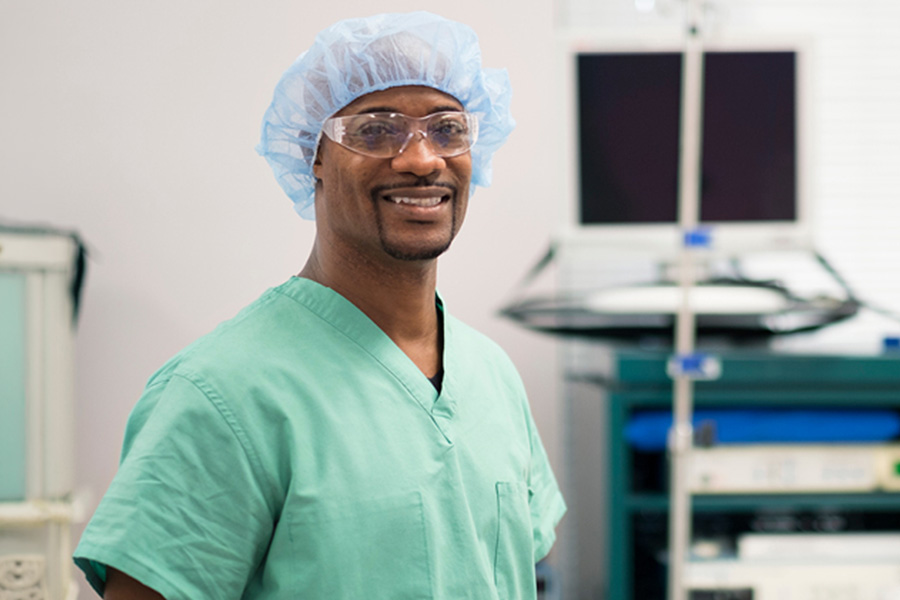
Sterile Processing Technician
Room M-117 • Three months
Day and evening classes
Introduces healthcare concepts and sterile processing techniques used to prepare, inspect, and sterilize medical instruments and equipment, keeping them safe for patients in surgical and clinical settings. Prepares students for the Certified Registered Central Service Technician (CRCST) certification exam and entry-level employment in a healthcare setting.
Sterile Processing Technician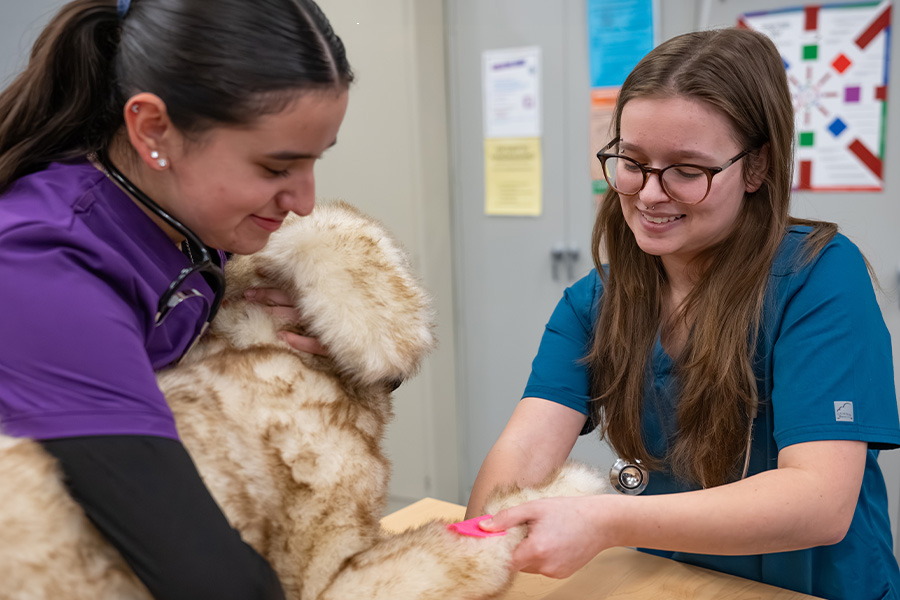
Veterinary Assistant
Room M-117 • Five months
Evening classes
Introduces animal care concepts and administrative procedures for supporting veterinarians in clinics and animal hospitals. Topics include small animal restraint, exam room procedures, veterinary pharmacy, surgical preparation and assisting, laboratory procedures, and imaging. Graduates receive a certificate of completion to work as a veterinary assistant.
Veterinary Assistant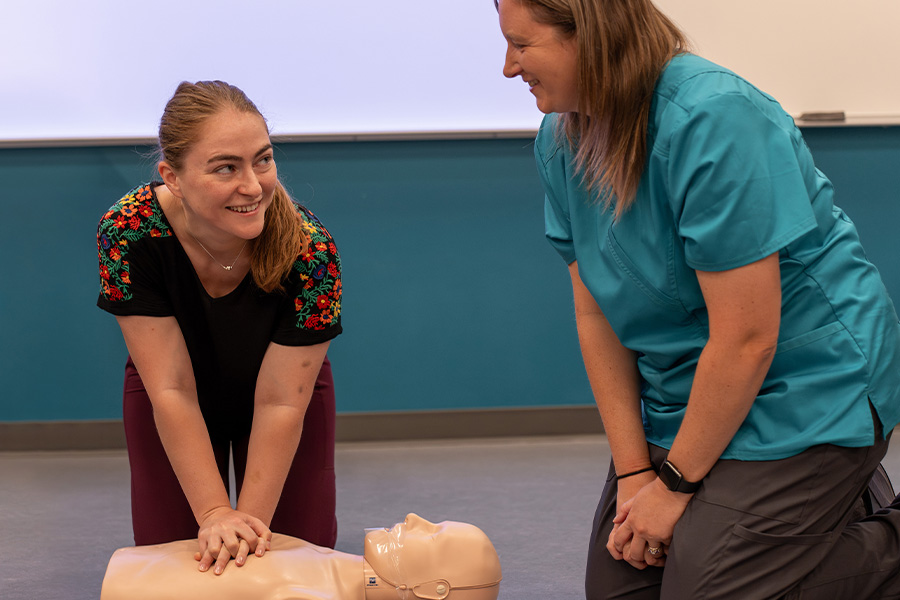
CPR, First Aid & AED
Room M-118 • Single course (SAF157)
Typically completed in one session
Provides training in cardiopulmonary resuscitation (CPR), first aid, and automated external defibrillator (AED) use, leading to American Heart Association Basic Life Support (BLS) certification. A current BLS CPR card is a prerequisite for most FCC healthcare career programs and for employment in many healthcare settings.
CPR/AED & First Aid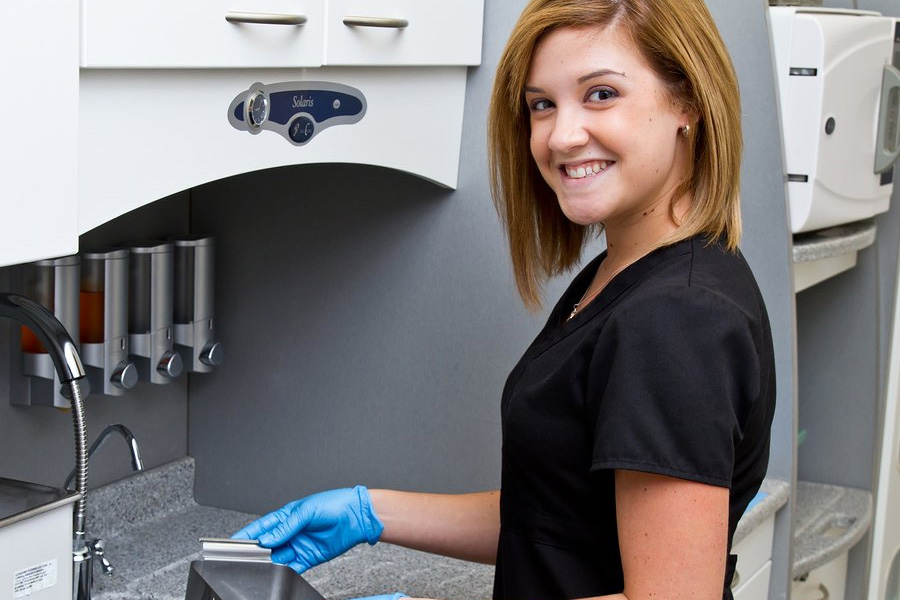
Dental Assisting & Oral Radiography
Room M-118 • Four to eight months
Day and evening classes
Introduces entry-level dental assisting knowledge and skills through hands-on practice in a simulated dental lab. Combined with the Oral Radiography course, the program prepares students for the DANB National Entry Level Dental Assistant (NELDA) certification exam. An Expanded Functions Dental Assisting course is planned for spring 2027.
Dental Assisting & Oral Radiography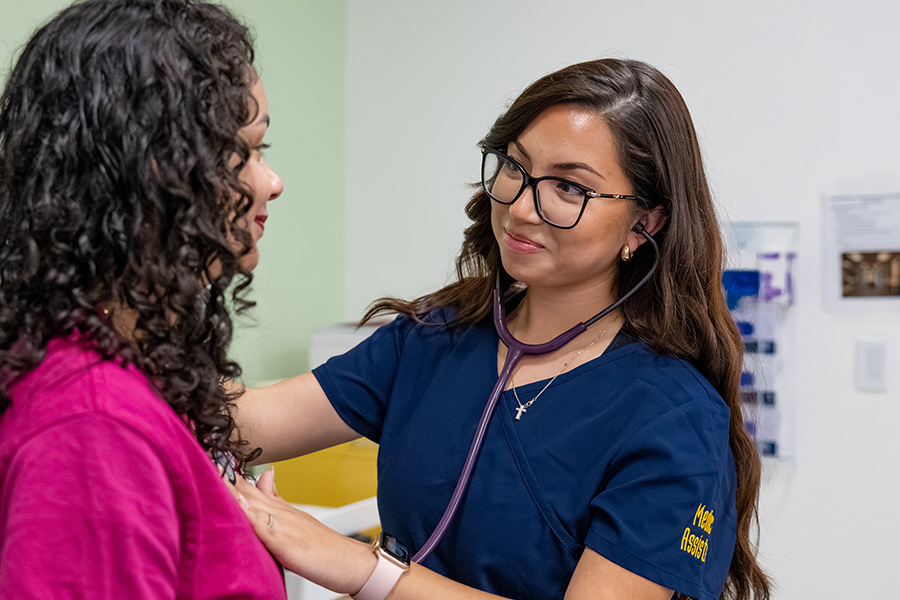
Clinical Medical Assistant (CMA)
Room M-119 • Eight months
Day and evening classes
Prepares students for frontline patient care roles by performing hands-on clinical tasks—such as taking vital signs and assisting with exams—and administrative duties such as scheduling appointments and maintaining medical records. The program includes an externship and prepares graduates for the Certified Clinical Medical Assistant (CCMA) certification exam.
Clinical Medical Assistant (CMA)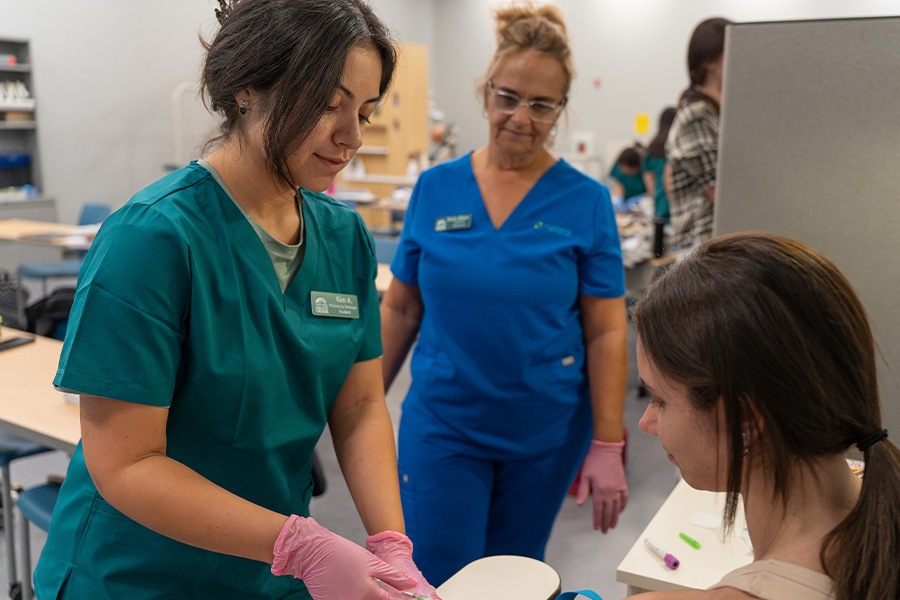
Phlebotomy Technician
Room M-119 • Nine months
Evening classes
Delivers classroom instruction and a required 100-hour clinical experience in blood collection. Students gain the skills to perform safe, effective venipuncture and prepare for certification exams, including the NHA Certified Phlebotomy Technician and ASCP Phlebotomy Technician (PBT) credentials.
Phlebotomy Technician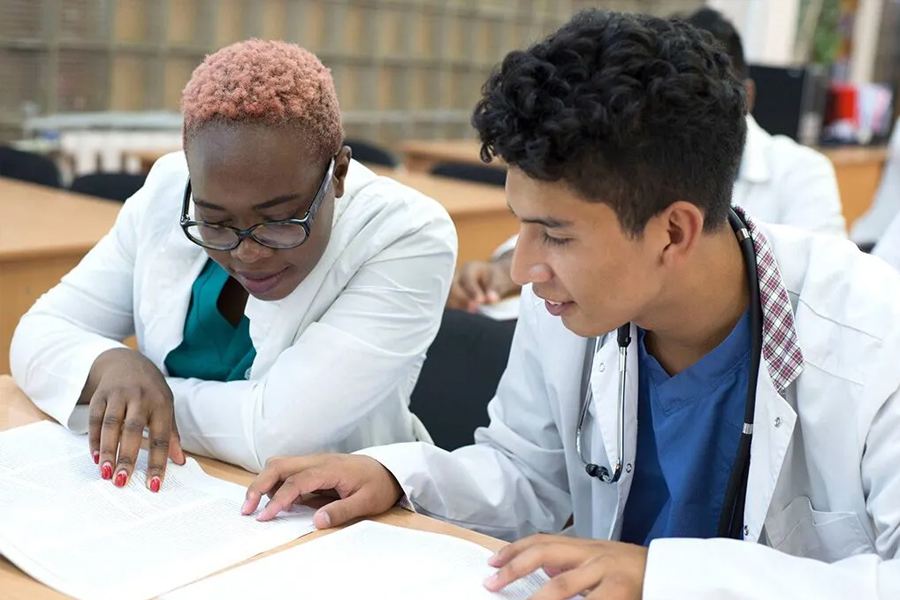
Medical Billing & Coding
Classroom • Five to six months
Day and evening classes
Prepares students for administrative careers in healthcare offices. Medical Billing track prepares students for the AAPC Certified Professional Biller (CPB) exam. Medical Coding track teaches use of the CPT, ICD-10, and HCPCS coding manuals and prepares students for the AAPC Certified Professional Coder (CPC) exam.
Medical Billing & Coding
Reception & Offices
Miller Center
Main Entrance & Offices
The facility features a welcoming reception area, nursing skills classrooms inspired by long-term care settings, and laboratories equipped with updated technology and furnishings commonly found in today's healthcare environments. Faculty offices are integrated alongside clinical learning spaces, fostering regular interaction, mentorship, and support.
Reception & Offices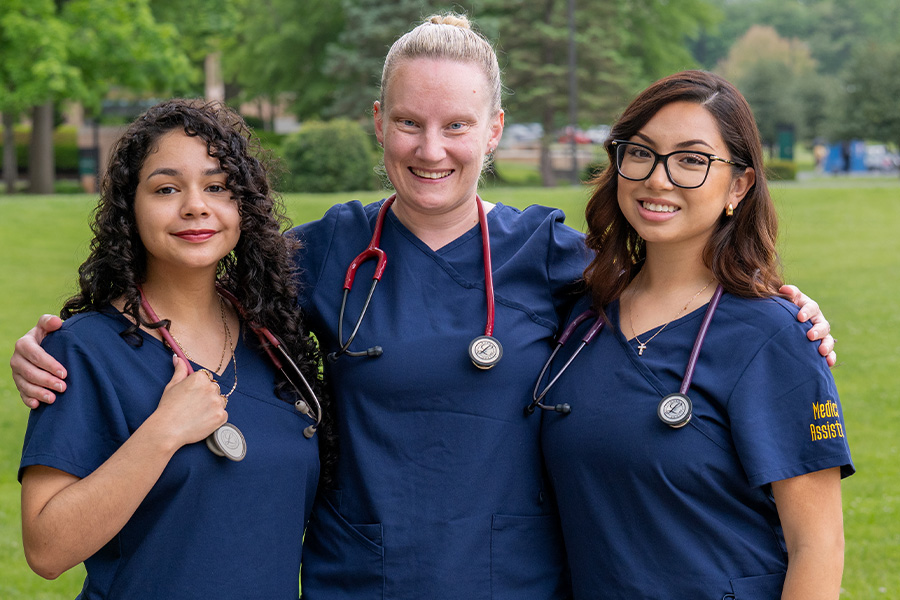
Impact on Our Community
The Center plays a critical role in strengthening the regional healthcare workforce by:
- Expanding access to high-quality, career-focused healthcare training
- Responding to evolving workforce and industry needs
- Preparing more students to enter the healthcare field with confidence and professional readiness
- Supporting the region's capacity to meet growing healthcare workforce demands
- Strengthening the long-term health, workforce resilience, and vitality of our community