Board of Trustees
Frederick Community College is governed by a seven-member Board of Trustees appointed by the Governor of Maryland. The Board serves as the College’s sole governing authority, exercising its responsibilities in accordance with the Maryland Education Article, Annotated Code of Maryland, Title 16—Community Colleges, Section 16-103, as amended. The Board of Trustees is charged with ensuring that the College is well governed, strategically directed, and effectively administered in service of Frederick County and the State of Maryland.
Policy Governance®
In June 2023, the Board adopted the Policy Governance® model, marking a deliberate shift to a comprehensive governance system grounded in accountability, transparency, and long-term community impact. Through Policy Governance®, the Board governs by setting clear expectations for what the College exists to achieve for the community and defining the boundaries within which the President is authorized to operate.
This approach enables the Board to lead through policy, delegate authority with clarity and confidence, and govern on behalf of the public while empowering professional administration to manage day-to-day operations.
In 2022, the Frederick Community College Board of Trustees began a focused effort to strengthen its governance—advancing transparency, accountability, and strategic alignment in service of the entire Frederick County community. That commitment led the Board to adopt Policy Governance®, a model developed by Dr. John Carver and used by boards worldwide to systematize accountability, clarify roles, define results, and protect organizational integrity. What follows is a brief look at the Board’s ongoing journey of governance transformation.
Why This Matters to Our Community
By adopting Policy Governance®, the Frederick Community College Board of Trustees clarified who is responsible for what, strengthened accountability for results, and created a governance system that keeps the Board focused on long-term outcomes rather than day-to-day operations. This allows the President and College leadership to manage effectively, innovate responsibly, and respond to changing community needs—within clear, transparent boundaries set by the Board.
For Frederick County, this means:
- Clear priorities grounded in community values
- Greater transparency in how decisions are made
- Stronger accountability for student success and public investment
- A future-focused institution positioned to adapt, grow, and lead
In short, this governance transformation helps ensure that Frederick Community College remains a trusted, mission-driven partner—delivering meaningful results for students, employers, and the broader community, now and for generations to come.
A Thoughtful Beginning
In October 2022, then-Chair Carolyn Kimberlin and President Annesa Payne Cheek attended
a presentation on Policy Governance®—facilitated by Dr. Dan Phelan—at the Association
of Community College Trustees (ACCT) Annual Conference. Drawn to its disciplined structure
and clear delineation of Board and President roles, the Board subsequently invited
Dr. Phelan to facilitate governance retreats in March and May 2023. During these sessions,
Trustees examined their existing governance practices through a Policy Governance®
lens.
Following additional research, reflection, and public discussion during Board meetings,
the Board formally affirmed its intent in June 2023 to transition fully to the Policy
Governance® model.
Building the Framework
To support implementation, the Board engaged Dr. Phelan for expert consultation to guide both the Board and the President through the transition. Over the following year, Trustees reviewed Policy Governance® best practices, studied model policies, and engaged in sustained dialogue about how the framework should be adapted to FCC’s context.
By June 2024—after five retreats and eight regular Board meetings—the Board completed the development and approval of 34 foundational governance policies. Prior to this work, the Board did not operate under a formal, comprehensive governance policy framework. The newly adopted policies—including Governance Process, Board–CEO Delegation, Executive Limitations, and Ends—were shaped through extensive deliberation to ensure alignment with FCC’s mission, institutional culture, and community priorities.
With the foundational policies in place, the Board and President continued advancing implementation of the Policy Governance® system by transitioning from policy development to active performance monitoring. This phase focused on defining, measuring, and assessing institutional and presidential performance in direct alignment with the Board’s adopted policies.
During FY 2025, the Board formally accepted the President’s reasonable interpretations
of its policies—establishing the measurable standards the Board uses to assess compliance
and monitor performance. To support this work, the President developed and submitted
Baseline Insight Reports, which provided an initial snapshot of institutional performance.
These reports helped orient the Board to current conditions and established a clear
baseline against which future performance would be measured.
Building on that foundation, the President began submitting formal Monitoring Reports
in FY 2026. These reports now serve as the primary mechanism through which the Board
evaluates both organizational performance and the President’s performance. Under Policy
Governance®, the President is evaluated solely on the demonstrated performance of
the College in relation to the Board’s stated expectations.
At the same time, the Board advanced another essential pillar of the Policy Governance®
model: Ownership Linkage.
Ownership linkage is the process through which the Board of Trustees connects with
the community it represents—the “owners” of Frederick Community College. The owners
are the residents of Frederick County. These individuals entrust the Board with safeguarding
the College as a public asset for the benefit of the entire community.
Through intentional listening, dialogue, and engagement, the Board seeks to understand
the values, priorities, and aspirations of the residents of Frederick County. This
understanding informs the Board’s definition of the results (or “Ends”) the College
should achieve, and for whom. Effective ownership linkage helps ensure that the Board
governs in the long-term public interest—rather than in response to the preferences
of any single group or short-term concerns.
While the Board’s primary focus is the owner perspective—representing the long-term
public interest of Frederick County—it recognizes that other important perspectives
also shape the College’s work. Customer and stakeholder perspectives provide valuable
insight into how FCC’s services are experienced and how the College aligns with broader
community needs. These perspectives are treated differently: the President manages
and responds to them operationally, while the Board receives summarized information
through formal reporting to assess overall performance and progress toward its expected
results (Ends). The sections below describe these perspectives and how they support
the College’s governance and continuous improvement.
Owner Perspective
The owner perspective reflects the viewpoint of community members who entrust the College to the Board to safeguard it as a public asset on behalf of the long-term public interest of Frederick County. When individuals speak from an owner perspective, the focus is on what the College should accomplish for the community as a whole rather than on personal or organizational benefit.
From an owner perspective, the focus is on:
- The long-term public interest of Frederick County
- The results the College should achieve for the community
- The values, priorities, and aspirations that should shape the College’s direction
- The responsible stewardship of public resources
This owner perspective guides the Board’s core governance responsibilities: defining the College’s Ends, affirming its long-term direction, establishing boundaries for presidential authority, and making governance decisions—such as approving the budget, setting performance expectations, and monitoring outcomes—that protect the institution’s long-term impact, sustainability, and relevance to the community.
Customer Perspective
The customer perspective reflects the viewpoint of individuals or organizations who rely on the College’s programs, services, and supports to meet specific needs. Community members speak from a customer perspective when they focus on how well FCC’s services work for them or for others who use the College’s services.
From a customer perspective, the focus is on:
- The accessibility, relevance, and quality of programs and services
- Whether the College is meeting specific educational, training, or support needs
- Responsiveness, clarity, and ease of navigating College processes
- The value received for the time, money, and effort invested
Customer feedback is gathered and addressed through the College’s administrative systems. The President provides the Board with summaries of this information—through monitoring reports, survey results, program evaluations, and other formal channels—so the Board can assess how well the College is achieving its Ends. The Board does not respond to individual customer concerns but uses this information to understand overall performance and community impact.
Stakeholder Perspective
The stakeholder perspective reflects the viewpoint of individuals, groups, and organizations whose work, priorities, or community goals intersect with the College. Community members speak from a stakeholder perspective when they consider how FCC’s performance supports—or is connected to—broader educational, economic, and civic outcomes. Stakeholders may include K–12 partners, employers, nonprofits, government agencies, universities, civic organizations, donors, and industry associations.
From a stakeholder perspective, the focus is on:
- FCC’s contributions to regional workforce strength, economic mobility, and community well-being
- Alignment between FCC’s programs and the needs of employers, partners, and key community sectors
- Opportunities for collaboration that advance shared priorities
- FCC’s role as a community anchor, leader, and problem-solver
Stakeholder perspectives are gathered and coordinated through the College’s administrative and partnership processes. Under the President’s leadership, the College engages with advisory councils, employers, community organizations, and public agencies to understand emerging needs, trends, and opportunities.
The Board receives summarized stakeholder information through strategic updates, monitoring
reports, environmental scans, and other formal reporting. This high-level information
helps the Board understand the broader context in which the College operates and the
external factors influencing community and workforce needs.
While stakeholder perspectives do not define the College’s Ends, they provide important
context that informs long-term alignment with regional priorities and support the
Board in ensuring FCC remains relevant, connected, and responsive to its community.
The following table shows how a single issue may be viewed differently through the owner, customer, and stakeholder lenses. Understanding these distinctions helps the Board and the President recognize the type of input being offered, how it should be interpreted, and how it appropriately informs governance, operations, and continuous improvement. Because individuals may speak from more than one perspective, it is important to understand how the same input is interpreted and used differently depending on the lens being applied.
| Owner Perspective | Stakeholder Perspective | Customer Perspective | |
|---|---|---|---|
|
|
Guides the Board’s Ends, long-term direction, and stewardship decisions. | Informs alignment, collaboration, and environmental context for both the President and Board. | Informs continuous improvement and helps the Board understand how services are experienced (via aggregated reporting). |
Issue |
|||
1. Access to Evening Classes |
“The community needs accessible education options for working adults across the County.” | “Our employees want to upskill, but your schedule doesn’t match shift patterns. More evening courses would help meet workforce needs.” | “I work full-time and can’t attend daytime classes — I need more evening options.” |
| 2. Workforce Readiness in a Growing Industry (e.g., Biotechnology) | “The County needs a talent pipeline that supports future economic growth and creates family-sustaining careers.” | “Our biotech firms urgently need entry-level technicians trained on specific lab skills and protocols.” | “I want to enter biotech, but I’m not sure whether FCC’s program will give me the skills to get hired.” |
| 3. Navigating College Processes (e.g., Enrollment/Advising) | “Residents expect the College to use public resources responsibly and create conditions that enable strong student success outcomes across the community.” | “Our nonprofit helps adults transition into education, but the current admissions process is hard for our clients to navigate.” | “The enrollment steps were confusing — I wasn’t sure what to do next, and it delayed my start.” |
| 4. Pathways to Economic Stability | “The community needs educational and workforce pathways that help residents achieve long-term economic stability and mobility. FCC should contribute to reducing economic vulnerability across Frederick County.” | “Our industry requires a talent pipeline with skills that lead to stable, reliable employment. We need FCC to prepare workers for roles that support economic stability in the region.” | “I want a program that leads to a stable career, but I need clearer information about which pathways can help me support myself and my family.” |
Ownership Linkage Plan
Over a series of several meetings during FY 2025, the Board developed and approved a one-year Ownership Linkage Plan for implementation in FY 2026. This plan establishes a structured process for trustees to engage with the residents of Frederick County — the College’s “owners” — through facilitated dialogues designed to gather input about emerging needs, values, and aspirations for Frederick County. That input will inform the Board’s ongoing review and refinement of its Ends Policies, ensuring they remain responsive to the community’s priorities. A multi-year Ownership Linkage Plan will be developed in the coming year to guide future engagement cycles and strengthen this vital feedback loop between the community, the Board, and the College.
A Lasting Commitment
The Board’s governance journey is ongoing, guided by a commitment to leave Frederick Community College stronger for the future. By embracing Policy Governance®, the Board is establishing a durable governance legacy—a system designed to provide clarity, transparency, and accountability over time. Through disciplined monitoring and intentional ownership engagement, the Board is operationalizing Policy Governance® at every level, ensuring that FCC’s performance, priorities, and policies remain tightly aligned with the public interest and the College’s enduring mission. As the Board continues to learn and deepen its practice, it does so with a shared purpose: to strengthen FCC’s role as a vital public institution—advancing learning, workforce development, and community well-being across Frederick County.
Meet the Trustees
The Trustees of Frederick Community College are engaged community leaders who bring a range of experiences and perspective to their service. Read below to learn more about each Trustee, including their background, highlights of their service, and what they value most about FCC and the Frederick community.
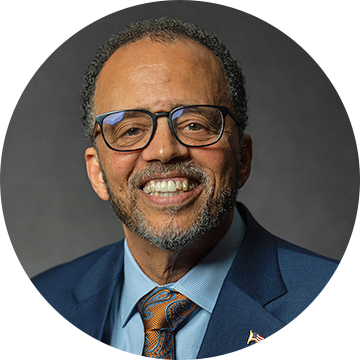

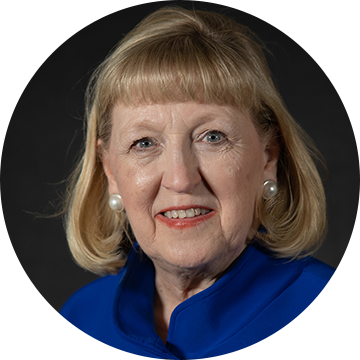

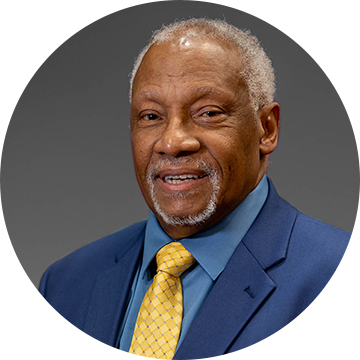



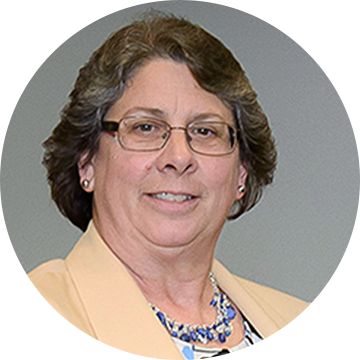
Janice Spiegel
Special Projects Manager/Budget Office
(Non-voting Frederick County Liaison)
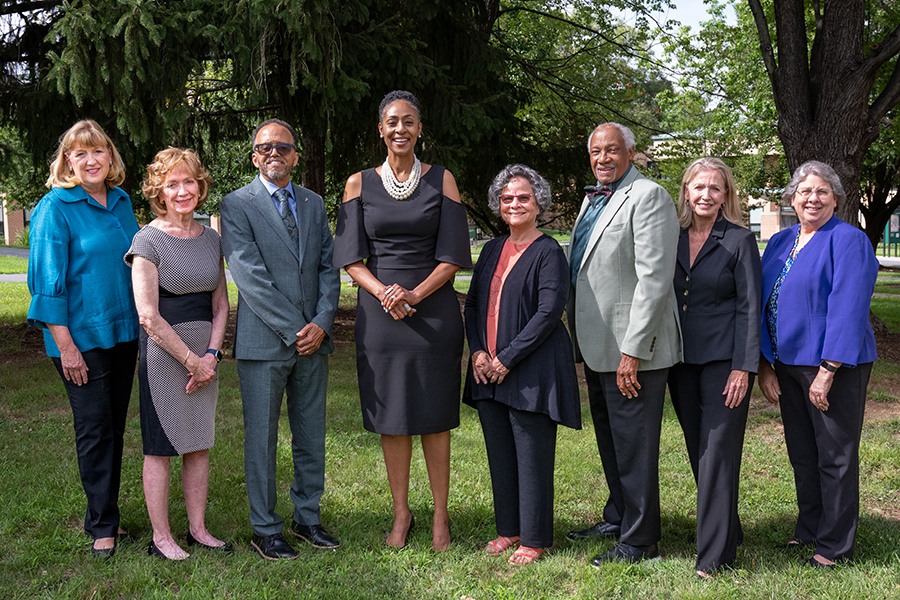
2026-2027 Board of Trustees
Dr. William Reid, Chair
Dr. Carmen R. Hernandez, Vice Chair
Dr. Annesa Cheek, President/Secretary-Treasurer
Jan H. Gardner
Carolyn Kimberlin
Theodore M. Luck
Tracey McPherson
Stephen G. Slater, Esq.
Janice Spiegel, Special Projects Manager/Budget Office (Non-voting Frederick County
Liaison)
(Members of the Board pose for a photo; Stephen G. Slater, Esq. is not pictured.)
Contact: 301.846.2442